Extreme weather is making food production increasingly unpredictable. Prolonged droughts, heavy rainfall, and heat waves have a direct impact on crop yields, quality, and scheduling. What does this mean for growers, the food supply chain, and the affordability of food?
In Episode 2 of De Groeikamer, host Robin de Wever and co-host Wouter Kuiper explore this question together with climate analyst Reinout van den Born and greenhouse horticulture expert Jacco Besuijen:
How can we continue to produce sufficient, affordable, and reliable food in a changing climate?
Food security is about more than just volume
Food security isn’t just about the total amount of food. Products must also be available at the right time, be of good quality, and be affordable.
A smaller or delayed harvest therefore affects the entire supply chain. Growers can supply less, buyers must adjust their plans, and consumers may face higher prices or a more limited selection.
That is precisely why predictability is becoming increasingly important.
Weather is not the same as climate
A single wet summer or cold winter doesn’t tell the whole story about climate change. Weather refers to conditions today or this season. Climate refers to trends over a longer period.
For food producers, the increase in extremes is particularly significant. Prolonged drought, heavy precipitation, or heat at a vulnerable time can have major consequences. As a result, historical cultivation patterns offer less certainty than before.
What does this mean for growers?
Extreme weather affects yield, quality, and crop planning. Heat can stunt growth. Prolonged rain increases the risk of disease. Drought increases the need for irrigation, while water may actually become scarcer.
Costs can also rise. Consider the expenses associated with additional water storage, cooling, heating, crop protection, or infrastructure modifications. Furthermore, when planting or harvesting must be postponed, this has implications for staff, transportation, and agreements with buyers.
The challenge, therefore, goes beyond protecting a single harvest. It’s about ensuring a production system that continues to function reliably under changing conditions.
The Role of Controlled Cultivation
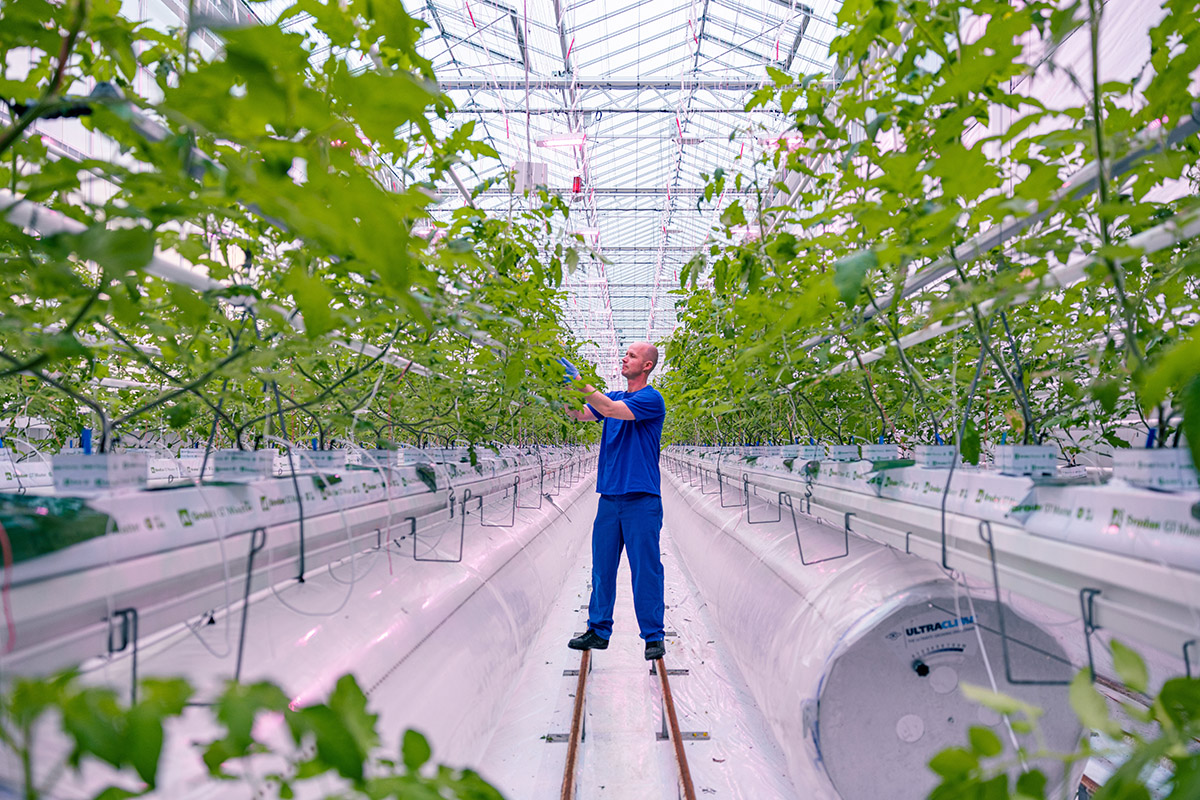
A greenhouse provides a protected environment where growers have greater control over temperature, humidity, water, and light. Heavy rain does not fall directly on the crops. Water can be applied precisely and is often reused. Conditions can be better managed using screens, ventilation, heating, and cooling.
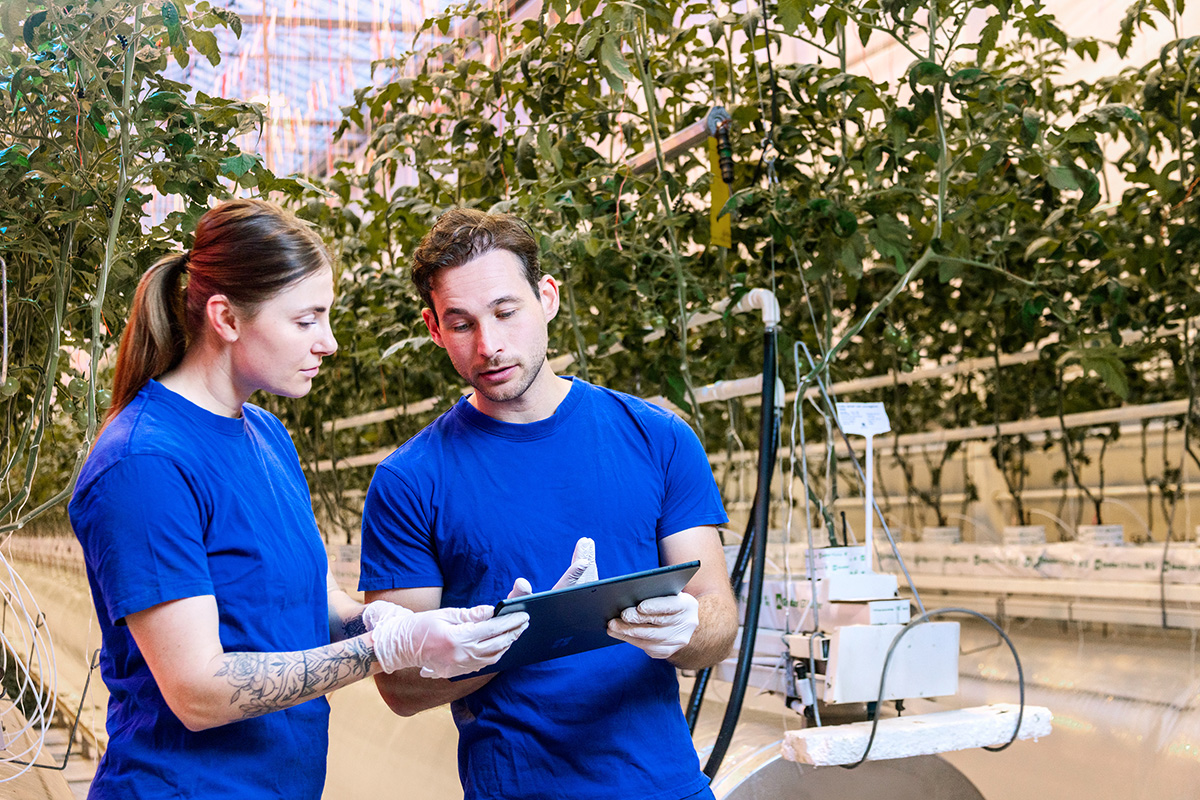
Data and smart climate control help growers make adjustments more quickly and accurately. In this way, controlled cultivation can contribute to more consistent quality, more efficient use of water and nutrients, and more predictable production.
No Solution Without Conditions
A greenhouse is not automatically sustainable or affordable. The outcome depends on the energy supply, available infrastructure, water,CO2, technical expertise, and investment capacity.
The local situation is also a determining factor. A solution that works in the Netherlands cannot be applied without modifications in a desert region or a cold climate. Technology must be suited to the crop, the market, and the environment.
Making production more manageable
We cannot make the climate entirely predictable. However, we can better protect food production and organize it in a more manageable way.
Controlled cultivation is not a universal answer, but it is an important part of the solution. By intelligently combining knowledge, technology, and local conditions, we can work toward a more reliable food supply for a growing world.
Listen to episode 2 of De Groeikamer on Spotify or Apple Podcasts (only available in Dutch) →


No Comments Yet
Let us know what you think