


How innovative greenhouse solutions contribute to future-proof food production.
The global demand for food continues to grow, while climate change is making food production increasingly challenging. Rising temperatures, drought and growing pressure on natural resources call for new solutions. How can we continue to produce enough food while using water, energy and other resources more efficiently?
High-tech greenhouse horticulture can play an important role in addressing these challenges. By combining innovative technologies with advanced growing systems, we can create opportunities to produce food more efficiently under controlled conditions.
The growing climate challenge
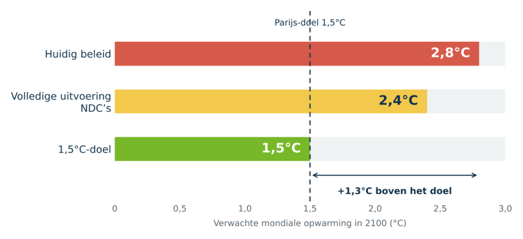
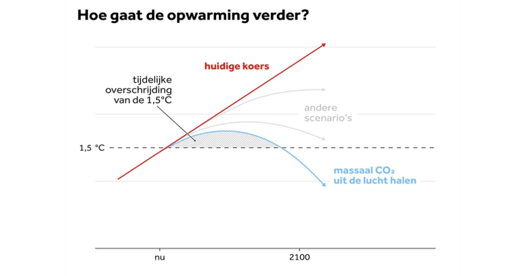
According to the UNEP Emissions Gap Report 2025, limiting global warming to 1.5°C is becoming increasingly difficult. The report indicates that this threshold is very likely to be temporarily exceeded within the next decade.
If countries fully implement their current climate plans, global temperatures are projected to rise by 2.3 to 2.5°C over the course of this century. Based on current policies, this projection increases to approximately 2.8°C.
These developments highlight the importance of continued efforts to improve sustainability. The greenhouse horticulture sector also has opportunities to contribute to reducing CO₂ emissions and making more efficient use of natural resources.
The role of high-tech greenhouse horticulture
Climate change has a direct impact on global food production. Longer periods of drought, rising temperatures and limited water availability make it increasingly important to grow crops under stable conditions.
High-tech greenhouse horticulture offers opportunities to address these challenges. In a controlled growing environment, factors such as temperature, water and energy can be managed more precisely according to the needs of the crops. This makes food production less dependent on external weather conditions.
Three developments are particularly important for the future of greenhouse horticulture:
- Using water more efficiently
Water is essential for food production, but its availability is under pressure in various parts of the world. Controlled growing systems allow growers to manage water use more precisely according to the needs of their crops. This creates opportunities to reduce waste and make more efficient use of available water resources. - Smarter energy use
Alongside water, energy plays an important role in greenhouse horticulture. Reducing dependence on fossil fuels requires energy-efficient solutions and the use of alternative energy sources.
These include electrification, renewable energy, the use of residual heat and smart energy systems. By considering energy use from the early stages of greenhouse project design, it becomes possible to better align energy demand with available energy sources. - Collaborating towards a future-proof supply chain
Climate change not only affects crop cultivation but can also impact the availability, delivery times and costs of materials.
Collaboration between growers, suppliers and technology partners is therefore becoming increasingly important. By combining knowledge and expertise, potential risks can be identified earlier, creating new opportunities to further develop the sector.
Innovation for a growing world
The challenges posed by climate change call for solutions that not only add value today but also consider the needs of tomorrow.
At KUBO, we develop innovative greenhouse solutions that support growers in producing food efficiently. We focus on the relationship between growing conditions, energy use, water availability and the specific requirements of each project.
Because innovation is not just about introducing new technologies. It is about how technology can contribute to more efficient and future-proof food production in practice.
By bringing together knowledge, technology and collaboration, we continue to develop solutions that meet the changing needs of the international greenhouse horticulture sector.
Building the future of food production together
Climate change calls for new ways of thinking and working. At the same time, it creates opportunities to further develop the greenhouse horticulture sector.
Through controlled growing systems, smart energy solutions and efficient water use, high-tech greenhouse horticulture can contribute to a future where more food is produced using fewer natural resources.
At KUBO, we remain committed to turning these opportunities into innovative greenhouse solutions for growers worldwide.
For a Growing World.
Source: UNEP, Emissions Gap Report 2025: Off Target
https://www.unep.org/en/publications/report/emissions-gap-report-2025

KUBO Group launches corporate movie | For a Growing World

KUBO and Haoyu Group take the next step in greenhouse horticultural

No Comments Yet
Let us know what you think