Discover how KUBO's Ultra-Clima® greenhouse technology and CO2 capture strategy are revolutionizing sustainable farming practices.
Revolutionizing Greenhouse Farming with Ultra-Clima® Technology
Greenhouse farming is undergoing a transformative shift, driven by the innovative Ultra-Clima® greenhouse technology developed by KUBO. This groundbreaking system integrates advanced climate control, energy efficiency, and CO2 capture strategies to create an optimal growing environment for crops. The Ultra-Clima® greenhouse is designed to maximize production while minimizing environmental impact, making it a cornerstone of sustainable agriculture.
Learn more about Ultra-Clima® greenhouse technology.
The Ultra-Clima® greenhouse leverages a semi-closed design and advanced ventilation systems to maintain a stable and homogeneous climate. This technology ensures that crops receive consistent conditions, which is crucial for enhancing yield and quality. By utilizing energy-efficient heating and cooling systems, the Ultra-Clima® greenhouse reduces energy consumption and supports the use of renewable energy sources, aligning with global sustainability goals.
The Role of CO2 Capture Strategy in Reducing Carbon Footprint
One of the most innovative aspects of the Ultra-Clima® greenhouse is its CO2 capture strategy. Traditional greenhouses often rely on fossil fuel combustion for CO2 fertilization, which contributes to greenhouse gas emissions. In contrast, the Ultra-Clima® greenhouse employs a revolutionary approach that captures CO2 from the external atmosphere, utilizing it to enhance crop growth while significantly reducing the carbon footprint.
This strategy involves using external air as a source of CO2 when ventilation is required for climate control. By aligning the internal CO2 concentration with that of the external atmosphere, the Ultra-Clima® greenhouse ensures that all supplied CO2 is absorbed by the crops, eliminating waste and emissions. This approach not only enhances sustainability but also reduces the dependence on fossil fuels and the associated costs.
Energy Efficiency: A Key Component of Sustainable Farming
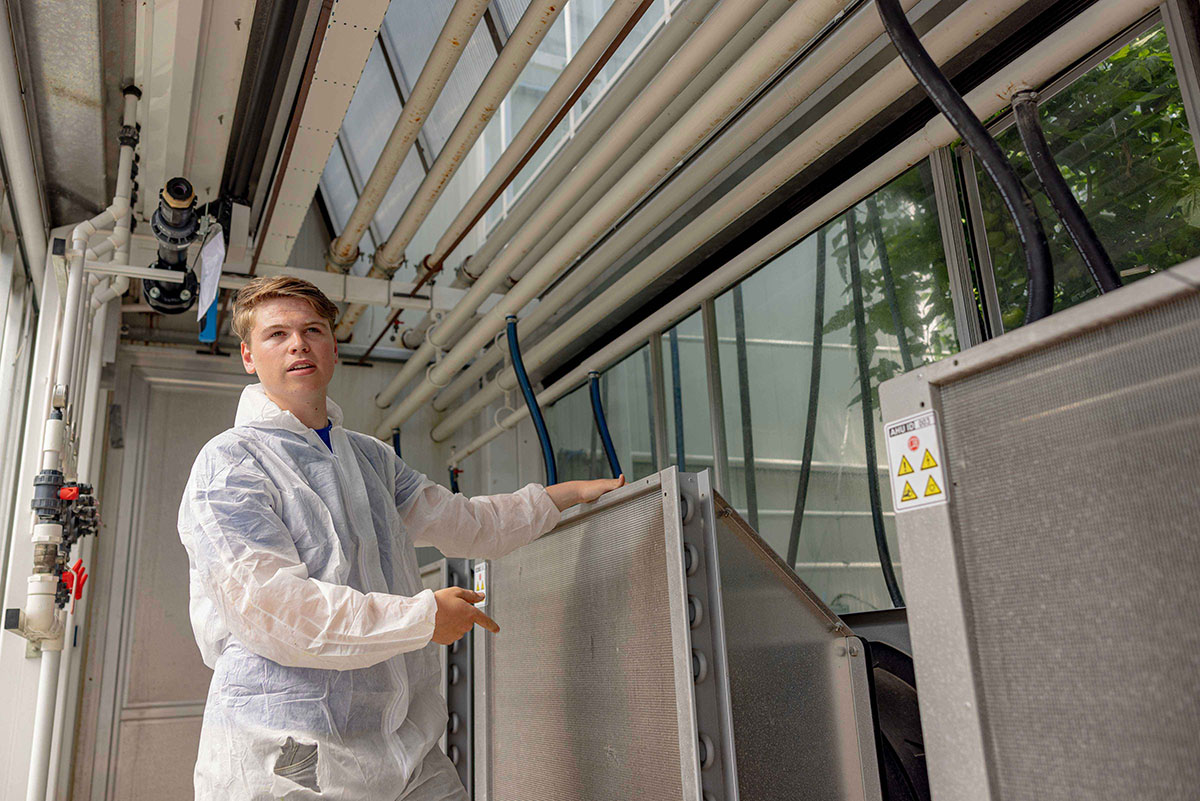
Energy efficiency is paramount in the pursuit of sustainable farming, and the Ultra-Clima® greenhouse excels in this domain. The system's primary heating mechanism, the Air Handling Unit Heat Block (AHU HB), utilizes low-grade heat to warm the greenhouse air. This method is significantly more energy-efficient compared to conventional heating systems, reducing the overall energy consumption.
Moreover, the Ultra-Clima® greenhouse integrates advanced technologies like the Air Handling Unit Fan (AHU Fan) to ensure optimal ventilation without excessive energy use. By maintaining ideal temperature and humidity levels, the system supports healthy crop growth and minimizes energy waste. These innovations contribute to a more sustainable and cost-effective farming operation, making the Ultra-Clima® greenhouse a critical tool for modern agriculture.
Enhancing Crop Yield and Quality through Advanced Technologies
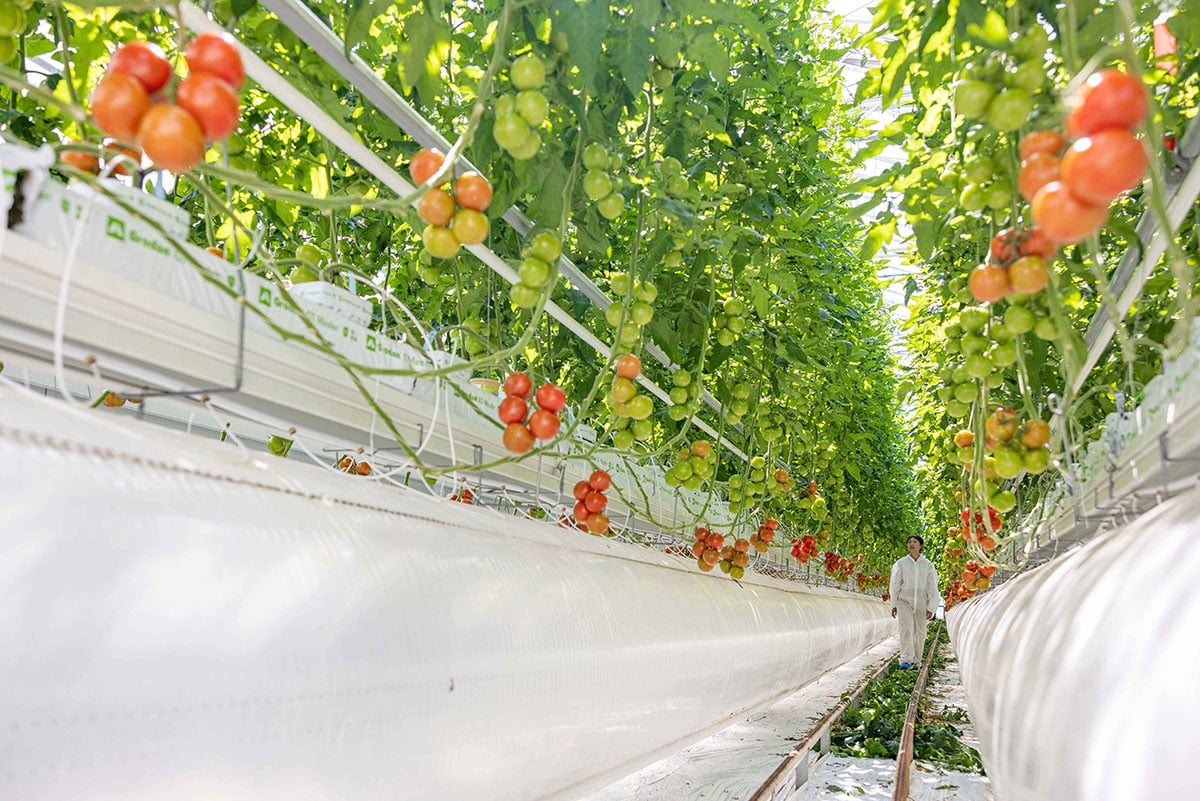
The Ultra-Clima® greenhouse is not just about sustainability; it also aims to enhance crop yield and quality. The controlled environment ensures that crops receive the optimal conditions for growth, leading to higher yields and better-quality produce. The integration of CO2 fertilization strategies further boosts photosynthesis, promoting healthier and more robust plants.
Additionally, the Ultra-Clima® greenhouse allows for precise control over irrigation, lighting, and nutrient delivery, ensuring that crops receive exactly what they need at the right time. This level of precision reduces waste and maximizes efficiency, resulting in superior crop performance. The ability to produce high-quality crops consistently makes the Ultra-Clima® greenhouse an attractive option for growers looking to meet market demands and achieve sustainable growth.
Water Conservation and Reduced Use of Crop Protection Agents
Water conservation is another critical aspect of sustainable farming addressed by the Ultra-Clima® greenhouse. The system's design includes efficient irrigation methods that minimize water use while ensuring that crops receive adequate hydration. By optimizing water delivery and recycling, the Ultra-Clima® greenhouse helps conserve this precious resource, contributing to environmental sustainability.
Furthermore, the controlled environment of the Ultra-Clima® greenhouse reduces the need for chemical crop protection agents. The stable climate and advanced ventilation systems minimize the risk of pest and disease outbreaks, allowing for more natural and less chemical-reliant growing practices. This approach not only benefits the environment but also enhances food safety and quality, aligning with consumer preferences for healthier and more sustainable produce.
Future Prospects: Expanding Sustainable Practices to Other Crops
While the current focus of the Ultra-Clima® greenhouse technology is on tomato cultivation, its principles and benefits can be extended to other crops such as peppers, cucumbers, strawberries, and leafy greens. The potential for broader application means that more growers can adopt sustainable practices and enjoy the benefits of increased efficiency, reduced environmental impact, and improved crop quality.
KUBO is committed to ongoing research and development to explore the full potential of the Ultra-Clima® greenhouse technology for a variety of crops. By continuing to innovate and adapt, KUBO aims to lead the way in sustainable agriculture, helping growers worldwide achieve their production goals while safeguarding the planet for future generations.
In conclusion, the Ultra-Clima® greenhouse technology and its CO2 capture strategy represent a significant leap forward in sustainable greenhouse farming. By reducing carbon footprint, enhancing energy efficiency, and improving crop yield and quality, this innovative system is setting new standards for the industry. As we look to the future, the adoption of such advanced technologies will be crucial in meeting global food demands sustainably and responsibly.
Talk to our team about your next sustainable greenhouse project.


No Comments Yet
Let us know what you think