
How semi-closed greenhouses increase yields

Key Insights: How Semi-Closed Greenhouses Increase Yields
- Semi-closed greenhouses use positive pressure and mechanical ventilation for precise climate control, enabling growers to maintain more consistent production under a wide range of outdoor conditions.
- Under suitable conditions, energy savings of up to 18.5% are possible through heat recovery, efficient cooling, and more efficient use of CO2.
- Stable temperature, humidity, and CO2 concentration can lead to approximately 10% higher crop yields, depending on the crop, location, and cultivation strategy.
- With Ultra-Clima®, KUBO has built more than 700 hectares of semi-closed greenhouses worldwide across a variety of climate zones.
- The payback period can be shortened through lower operating costs and more consistent harvest volumes. The final result also depends on the additional investment, energy prices, and local conditions.
What is a semi-closed greenhouse design?
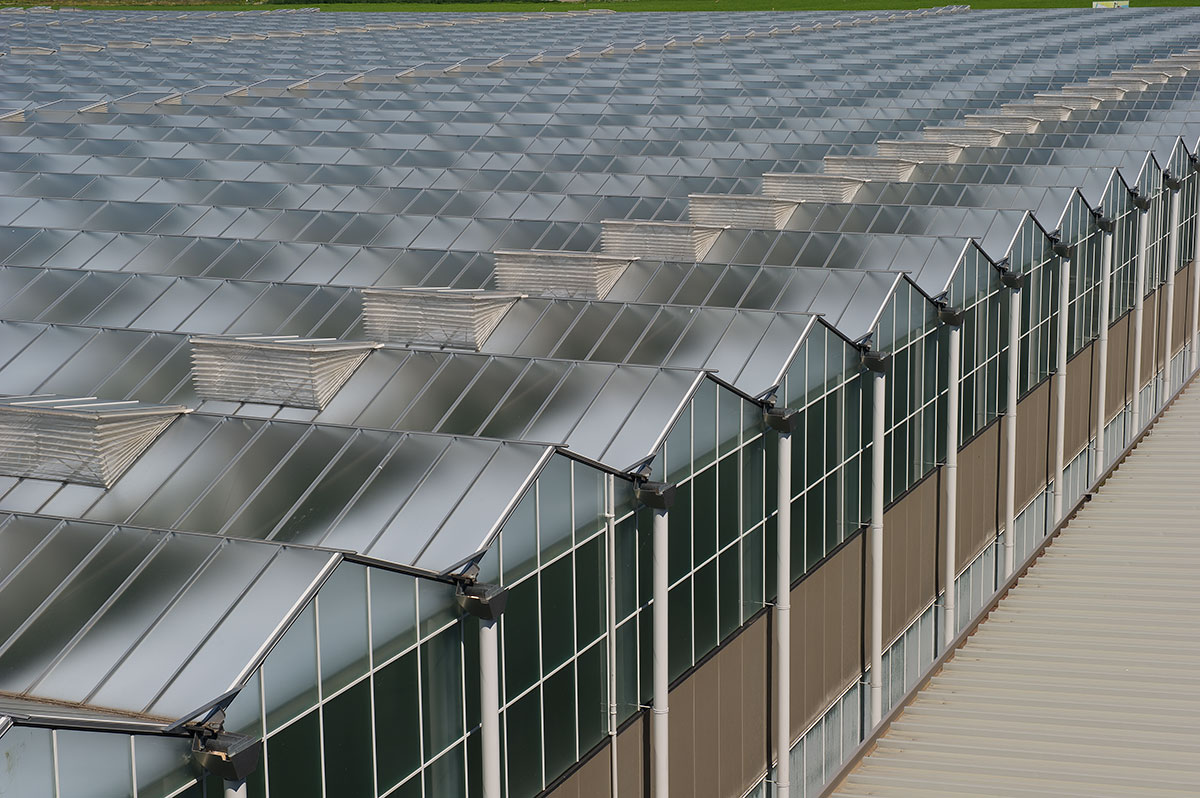
A semi-closed greenhouse operates fundamentally differently from a traditional greenhouse with roof vents. Instead of opening windows to release heat, this design uses mechanical ventilation with fans and air-handling units. A positive pressure of 10 to 20 pascals keeps the indoor air stable and prevents unfiltered outside air from flowing in.
This means complete control over temperature, humidity, and CO2 concentration, regardless of the weather outside. Whether it’s 35 degrees in the desert or -10 degrees at the Arctic Circle, the greenhouse maintains a constant climate. A more stable climate can lead to more marketable produce, less waste, and more predictable production. For growers seeking predictability, this design opens up possibilities that are simply not achievable with passive ventilation.
How does climate control work in a semi-closed greenhouse?
The heart of the climate control system is the Air Handling Unit. This unit draws in outside air, filters it, cools or heats it to the desired temperature, and distributes the conditioned air through double-walled hoses beneath the crops. This creates a uniform climate from wall to wall.
A more uniform climate reduces temperature and humidity variations within the greenhouse. As a result, crops grow more uniformly, quality variations can be reduced, and a larger portion of the harvest can be sold as marketable produce. This contributes to a higher yield per square meter and a lower cost per kilogram.
Heat recovery plays a key role. When warm, humid greenhouse air is exhausted, the system captures the energy and reuses it to preheat fresh air. This results in significant savings on heating costs, especially during colder months. In addition,CO2 remains in the greenhouse longer because ventilation is reduced compared to open-roof ventilation systems.
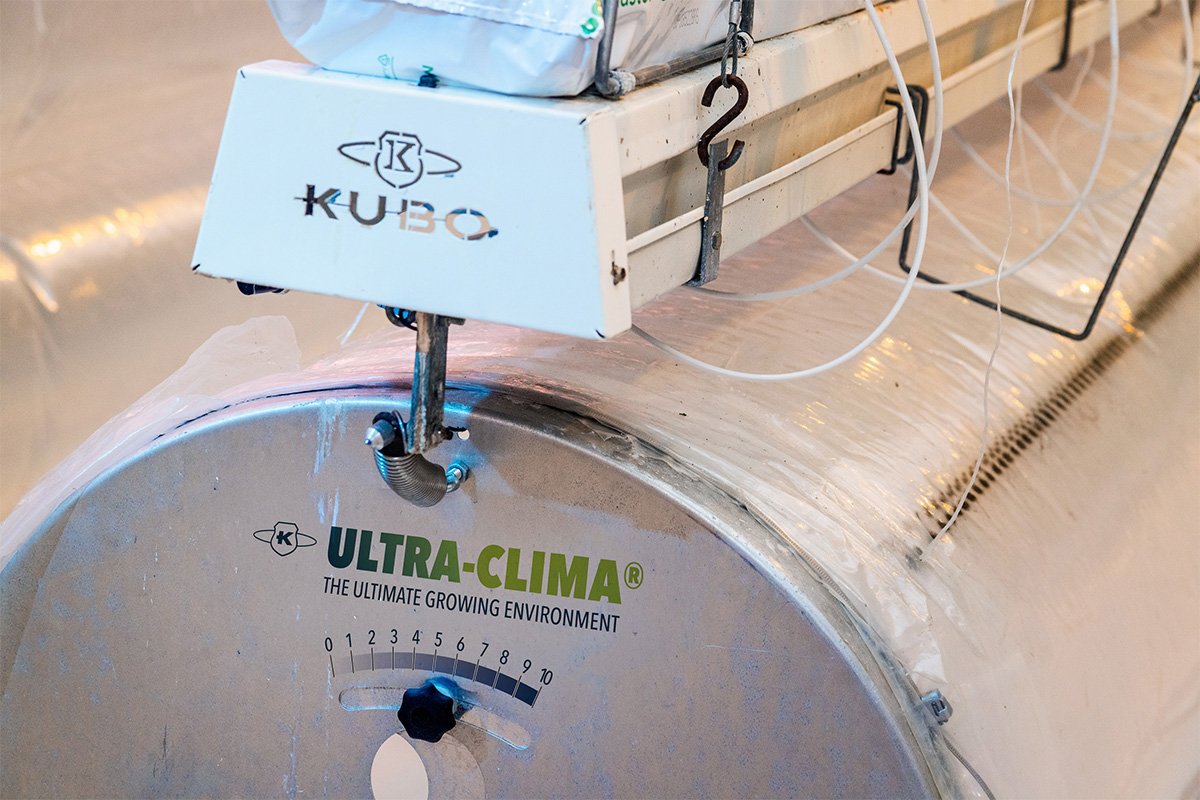
KUBO applies this principle in the Ultra-Clima®, which combines positive pressure, mechanical ventilation, climate mixing, and heat recovery into a single integrated system.
What energy savings does a semi-closed greenhouse provide?
Research shows that semi-closed greenhouses are up to 18.5% more energy-efficient than conventional designs. These savings result from several factors: reduced heat loss due to closed ventilation windows, reuse of residual heat, and more efficient cooling through evaporation.
In addition, semi-closed systems can utilize low-grade heat sources, such as residual heat of approximately 40 degrees from industrial processes or power plants. Whether this heat source is technically and financially viable depends, among other things, on the heat transfer system, the amount of waste heat available, the distance to the heat source, and the required infrastructure.
On the other hand, fans, pumps, and cooling systems consume electricity and require maintenance. The net energy savings therefore depend on the balance between the savings in heat and CO2 and the additional electricity and maintenance costs.
CO2 emissions per kilogram of tomatoes in an Ultra-Clima® greenhouse are more than 25.4% lower than with traditional cultivation methods. The lower emissions per kilogram may result from a combination of more efficient energy use and higher yield per square meter.
How does a semi-closed greenhouse increase crop yield?
Stable climate conditions ensure that plants experience less stress. Temperature fluctuations, sudden gusts of wind, or unexpected rain showers do not disrupt growth. This results in yield increases of approximately 10% for crops such as tomatoes and cucumbers.
CO2 management plays a central role in this. Because ventilation is reduced, metered CO2 remains available to the plants for longer. Growers can maintain the same or higher concentrations with less CO2 input, which stimulates photosynthesis and thus production. For financial returns, it is not only total production that matters, but especially the proportion of marketable product, product quality, and the amount of production per unit of energy used.
Casey Houweling, a pioneer in semi-closed cultivation, harvested more than 45 kilograms of tomatoes per square meter in his very first season. That marked the beginning of a trend that has since expanded globally to more than 700 hectares of successful projects.
In which climate zones do semi-closed greenhouses perform well?
From the Arabian Desert to northern Canada, semi-closed greenhouses are used in a wide range of climatic conditions. In hot, dry regions, active cooling can significantly lower the interior temperature. The extent of this reduction depends, among other factors, on humidity levels, the cooling system used, and the system’s capacity. This helps mitigate heat stress and extend the growing season.
In warm, humid areas, the emphasis is more on controlling humidity and removing excess heat. This can contribute to a more stable climate but may require greater cooling capacity than in a dry climate.
In cold climates, the system offers advantages for assimilation lighting. The heat from the lamps can be utilized more effectively, and humidity can be controlled with less heat loss. This can reduce energy consumption and ensure a more uniform crop.
KUBO has built Ultra-Clima® greenhouses in deserts, tropical areas, and regions with harsh winters. This geographic diversity proves that the concept is not limited to a single climate type but is universally applicable for professional growers.
What advantages does a semi-closed greenhouse offer for crop protection?
Because the greenhouse is under positive pressure, air always flows outward when doors open. This makes it more difficult for insects and other pests to gain access to the growing area. This significantly reduces the need for chemical crop protection products.
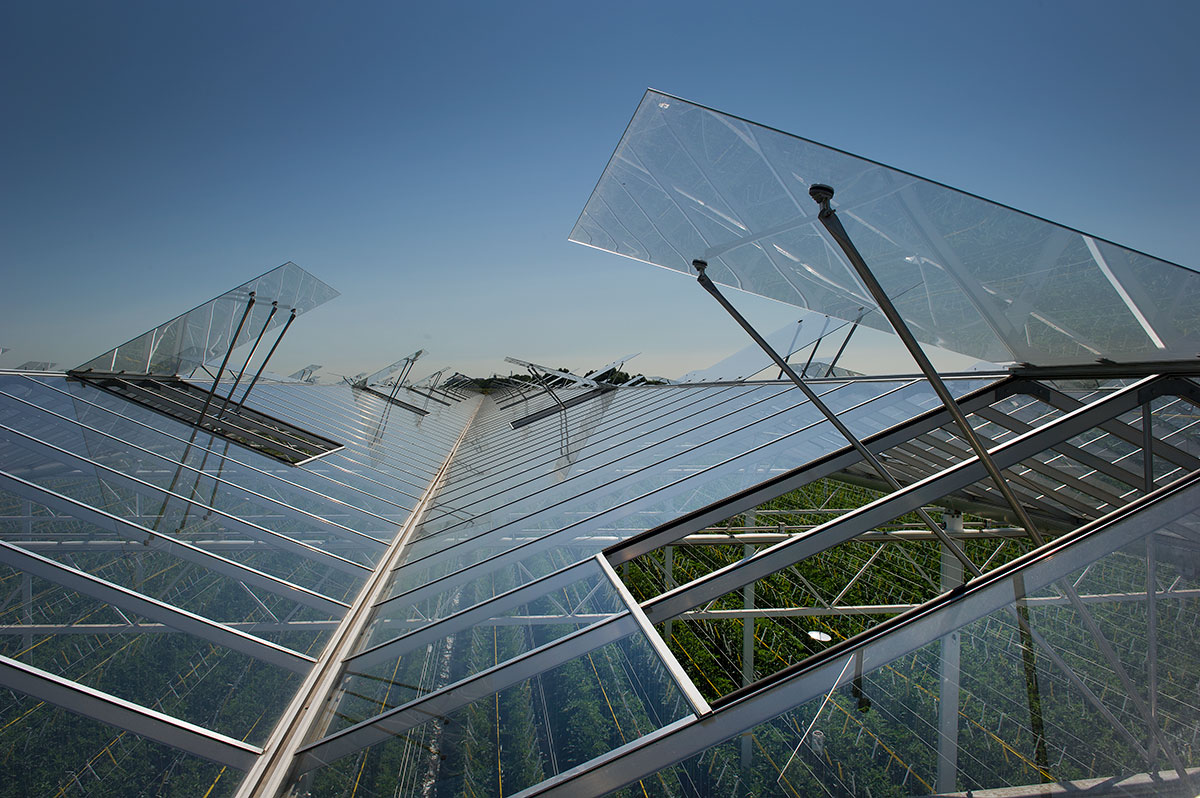
Traditional greenhouses require up to 4% of their roof area for insect-screened ventilation openings. Semi-enclosed designs largely eliminate this need. The result is greater light transmission in areas where insect screens would otherwise be unavoidable.
Furthermore, uniform air circulation reduces the risk of fungal diseases such as botrytis. Whereas traditional greenhouses have dead spots and damp areas, a well-designed semi-enclosed system distributes air evenly across the entire growing surface.
What does this mean for the payback period?
The initial investment in a semi-closed greenhouse is higher than that of a conventional Venlo greenhouse. However, this is offset by lower operating costs due to reduced energy consumption, more efficient CO2 usage, and lower expenses for crop protection.
More predictable harvest volumes strengthen the financial picture. When growers are less dependent on unpredictable weather conditions, they can negotiate better terms with buyers. Consistent quality and reliable delivery schedules can contribute to more stable income.
For agri-tech investors, this offers an attractive risk profile. The technology is proven, the results are measurable, and the payback period improves as energy prices rise and sustainability requirements increase.
The Future of Semi-Closed Cultivation
After fifteen years of development, the semi-closed greenhouse is far from fully developed. On the contrary, there is much more to come. Autonomous cultivation systems, data-driven climate control, and further integration of hardware, software and cultivation expertise are opening up new possibilities.
KUBO continues to invest in research and development through test centers where new concepts are validated before being implemented in the field. This approach ensures that innovations not only work on paper but also actually add value for growers and investors.
Frequently Asked Questions about semi-enclosed greenhouses
A semi-closed greenhouse combines mechanical ventilation with limited natural ventilation options. A fully closed greenhouse has no roof vents and relies entirely on air conditioning. KUBO’s Ultra-Clima® is a semi-closed system that provides optimal climate control without the high costs associated with fully closed climate systems.
Research shows energy savings of up to 18.5% compared with conventional greenhouses. The exact savings depend on the location, crop, heating system and energy sources. KUBO’s Ultra-Clima® also achieves more than 25% lower CO₂ emissions per kilogram of produce.
Semi-closed greenhouses are highly suitable for fruiting vegetables such as tomatoes, peppers and cucumbers, as well as ornamental crops and specialty crops. KUBO’s Ultra-Clima® technology is optimised for five to six crop types that together account for 95% of the fruit and vegetable market.
Positive pressure of 10 to 20 pascals causes air to flow outwards when doors are opened. This makes it more difficult for insects and spores to enter. KUBO’s Ultra-Clima® system effectively keeps pests out and significantly reduces the need for chemical interventions.
Absolutely. Semi-closed systems work very well with low-grade heat at around 40°C. This creates opportunities to use residual heat from industrial processes or power plants. KUBO has completed projects in which these low-cost heat sources significantly reduce energy costs.
You May Also Like
These Related Stories
What limits year-round yields in traditional greenhouses?
What is a semi-closed greenhouse?
No Comments Yet
Let us know what you think